Government Recapitalizes Five Banks to Strengthen Ghana’s Financial Sector
The government says several major banks in Ghana are now in a stronger financial position following a series of recapitalisation measures aimed at improving confidence in the banking sector.
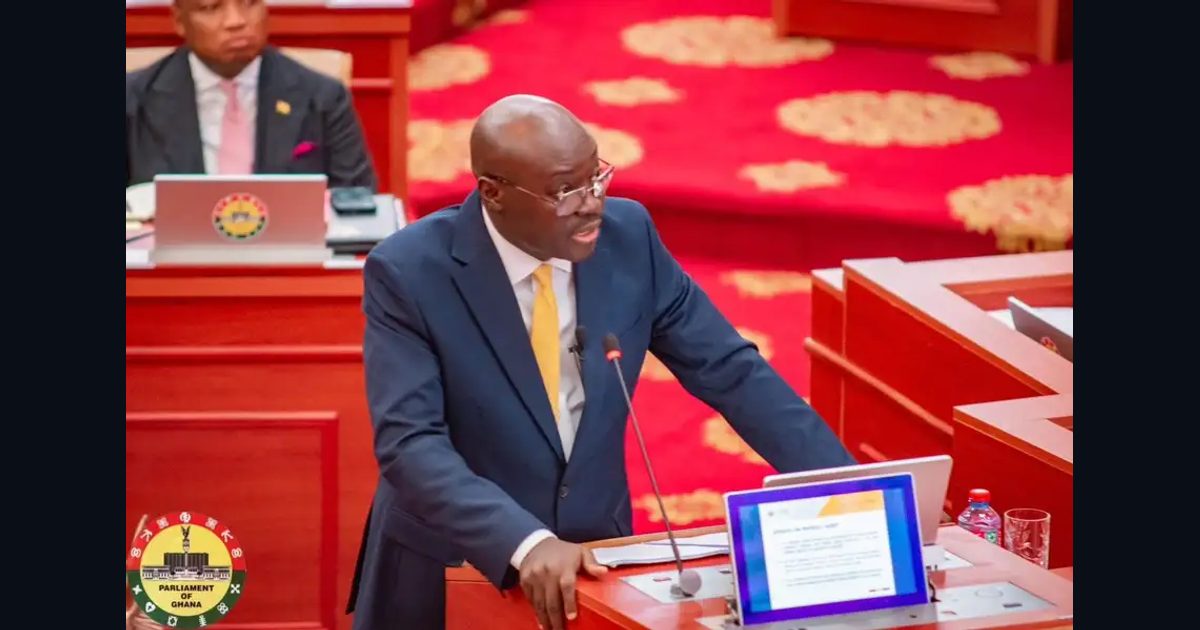
Finance Minister Dr Cassiel Ato Forson disclosed this while presenting the 2026 Mid-Year Budget Review to Parliament.
According to him, the government fully recapitalised the National Investment Bank, Agricultural Development Bank and Consolidated Bank Ghana in July 2025.
Recapitalisation means providing a bank with additional money to strengthen its finances and ensure it can continue operating, lending to customers and meeting its financial obligations.
Dr Forson said the intervention was necessary to restore stability and confidence in the banking industry.
“Government acted decisively in July 2025 to restore confidence and stability in Ghana’s banking sector by fully recapitalising the National Investment Bank, the Agricultural Development Bank and the Consolidated Bank,” he said.
UMB and Prudential Bank Strengthened
The Finance Minister also announced that the Ghana Amalgamated Trust had completed the recapitalisation of UMB Bank.
Prudential Bank has also been fully capitalised through an arrangement led by private sector investors.
“Last week, the Ghana Amalgamated Trust completed the full recapitalisation of UMB Bank. In addition, the government facilitated the full capitalisation of Prudential Bank through a private sector led approach,” Dr Forson stated.
He added that both banks are now fully capitalised and ready to expand their operations.
The Finance Minister encouraged individuals, businesses and institutions to engage with the banks and take advantage of the financial services they provide.
Bank of Ghana Recapitalisation Continues
Dr Forson also provided an update on plans to strengthen the financial position of the Bank of Ghana.
He explained that the 2023 Domestic Debt Exchange Programme had a major effect on the central bank’s balance sheet.
The debt restructuring reduced the value of some of the government securities held by the Bank of Ghana. This weakened the central bank’s capital position and resulted in negative net equity.
“The 2023 Domestic Debt Exchange Programme had a significant adverse impact on the Bank of Ghana’s balance sheet, substantially weakening its capital and resulting in a negative net equity position,” he said.
Negative net equity means the value of an institution’s liabilities is higher than the value of its assets.
To address the situation, the government and the Bank of Ghana signed a Memorandum of Understanding on January 6, 2025.
The agreement provides a framework for the government to gradually recapitalise the central bank and restore its financial strength over time.
“Consistent with the commitment in the MOU and as a result of this government’s resolve to restore the Bank’s financial strength, steps are being taken to recapitalise the Bank of Ghana over time,” Dr Forson said.
The Finance Minister said the recapitalisation efforts are part of the government’s broader plan to strengthen Ghana’s financial institutions, protect depositors and maintain stability in the banking sector.
See our editorial policy for how we source and correct our reporting.