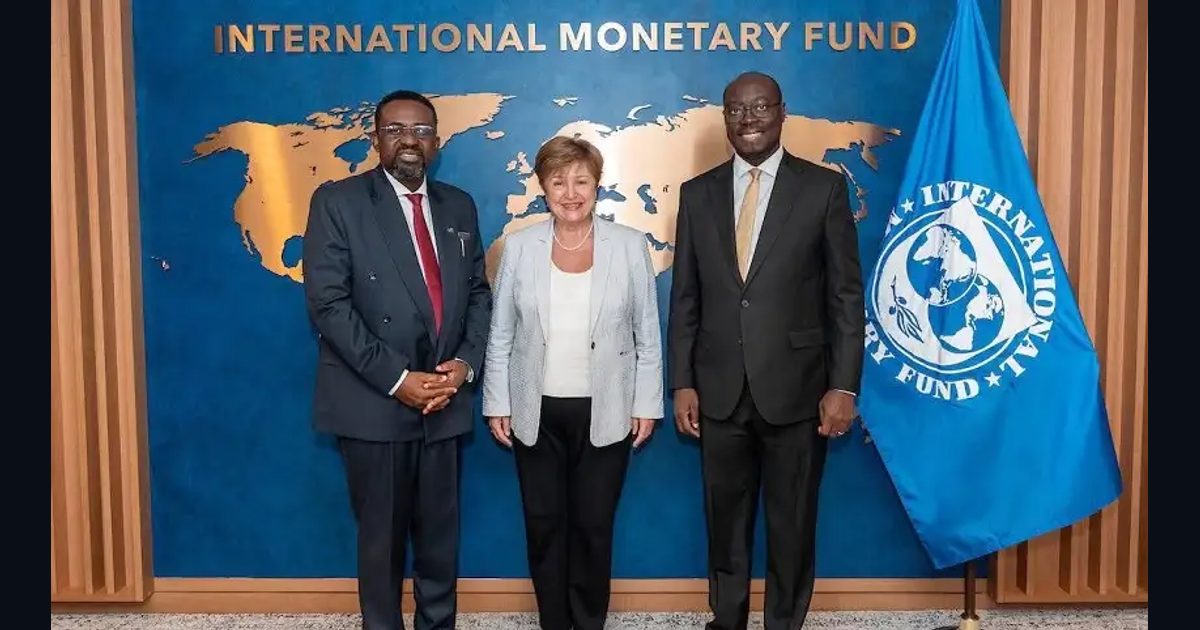
Ghana’s Debt Risk Improves as IMF Programme Comes to an End
Ghana has successfully completed its 39-month programme with the International Monetary Fund under the Extended Credit Facility, commonly known as the ECF.
The IMF Executive Board approved the completion of the programme on July 27, 2026 and authorised the release of the final US$371 million financing tranche to Ghana.
The country will now move into a new 36-month arrangement called the Policy Coordination Instrument, or PCI. Unlike the ECF, the PCI will not provide Ghana with additional IMF loans. Instead, the IMF will continue to monitor and support the country’s economic reforms.
What the ECF programme achieved
The ECF was introduced to help Ghana stabilise its economy after the country faced high inflation, debt problems, pressure on the cedi and large government deficits.
According to the report, the IMF was broadly satisfied with Ghana’s performance. It highlighted a sharp fall in inflation, stronger foreign exchange reserves, improved debt sustainability and a shift from a primary budget deficit to a surplus.
The IMF also upgraded Ghana’s risk of debt distress from “high” to “moderate.”
This does not mean Ghana’s debt problems are completely over. It means the country’s debt position is now considered less dangerous than before.
What is the new PCI?
The Policy Coordination Instrument is mainly a reform and monitoring programme.
Ghana will continue working with the IMF for another 36 months, but without receiving direct funding under the arrangement.
The programme is expected to focus on maintaining fiscal discipline, protecting debt sustainability, improving transparency, strengthening the financial sector and supporting economic growth.
In simple terms, Ghana is moving from an emergency financial support programme to a longer-term reform programme.
Why the US$371 million matters
The final US$371 million payment is expected to support government spending during the second half of 2026.
It could also strengthen Ghana’s foreign exchange reserves and balance of payments position. Stronger reserves may help the Bank of Ghana manage pressure on the cedi.
However, the payment does not guarantee that the cedi will continue appreciating. The currency will still be affected by imports, exports, foreign investment and demand for dollars.
What it means for Treasury bill and bond investors
The development is generally positive for investors in government securities.
Improved debt sustainability and continued IMF monitoring may strengthen confidence in Treasury bills and government bonds.
However, the report expects government borrowing to increase as more money is directed towards infrastructure and development projects.
This means interest rates will still depend on inflation, government borrowing, Bank of Ghana policy and investor demand.
Investors should not assume that Treasury bill rates will automatically fall because the ECF programme has ended.
What it means for stock market investors
A more stable economy can support companies listed on the Ghana Stock Exchange.
Lower inflation, a more stable cedi and stronger economic activity can reduce business costs and improve company earnings.
Banks, construction companies, consumer businesses, telecommunications firms and companies linked to infrastructure spending could benefit.
However, investors should still examine each company’s profits, debt, cash flow, dividends and valuation before buying shares.
A positive economic outlook does not mean every listed company will perform well.
Could government spending increase?
The report suggests that Ghana may reduce its primary surplus target from 1.5% of GDP to 0.5% from 2027.
A primary surplus means government revenue is higher than spending before interest payments are included.
IC Securities estimates that this change could create room for about GH¢18 billion in additional spending.
The money could support roads, energy, health, education and other infrastructure projects.
This may boost economic growth, but it could also lead to higher borrowing if government revenue does not improve.
Risks investors should watch
Despite the progress, Ghana still faces several risks.
These include financial problems in state-owned companies, challenges in the energy and cocoa sectors, weak revenue collection, vulnerabilities in parts of the financial system and higher domestic borrowing.
Major debt repayments expected from 2027 could also place pressure on government finances.
What beginner investors should understand
Ghana has made important progress, but the economic recovery is not complete.
The ECF helped stabilise the economy with direct IMF funding. The PCI is intended to ensure that Ghana continues its reforms after the funding programme ends.
For investors, the development is encouraging because it could improve confidence, attract foreign capital and support stronger economic activity.
However, it is not a signal to buy every stock, bond or Treasury bill without proper research.
Final takeaway
Ghana’s successful completion of the IMF programme is a positive signal for the economy and investors.
The final US$371 million payment, the improved debt-risk assessment and continued IMF monitoring could strengthen confidence in government securities, the cedi and the stock market.
The next phase will depend on whether the government maintains fiscal discipline, controls borrowing and addresses problems in state-owned companies, energy and cocoa.
For investors, the outlook is improving, but careful research and risk management remain important.
See our editorial policy for how we source and correct our reporting.