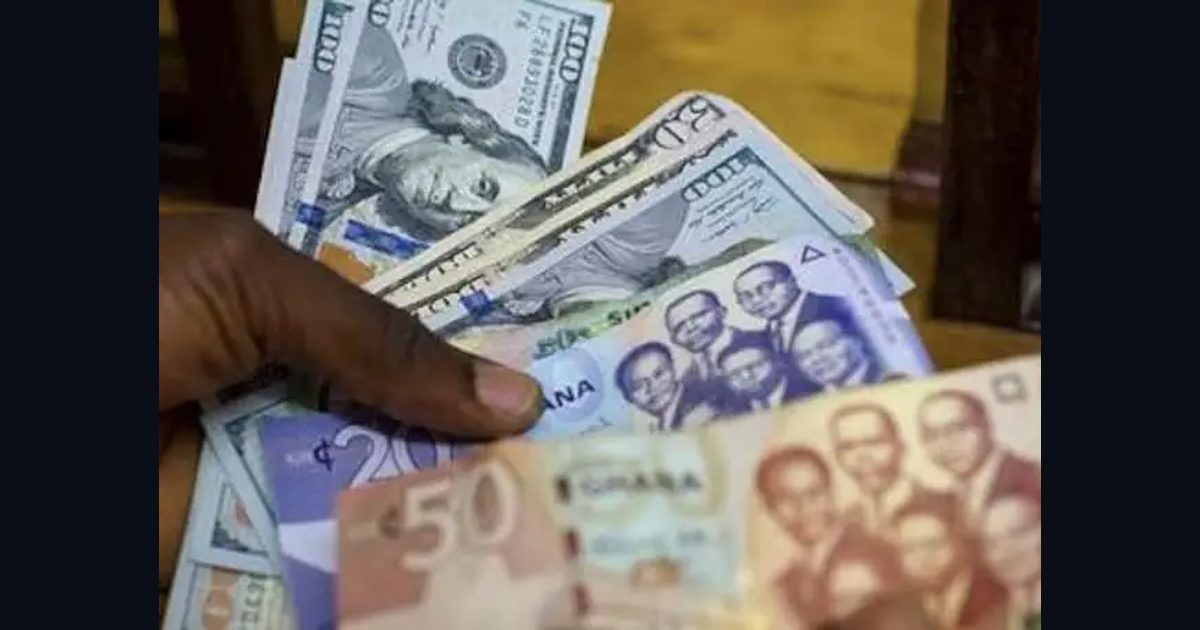
Interbank Market Records Fresh Cedi Depreciation Against Dollar
The Ghana cedi has continued to weaken against major foreign currencies, extending its year-to-date loss against the US dollar to 10.11% in the interbank market as demand for foreign exchange remains high.
Over a two-week period, the cedi closed at interbank mid-rates of GHS11.63 to the dollar, GHS15.62 to the British pound and GHS13.49 to the euro. This represented losses of 3.01% against the dollar, 1.65% against the pound and 1.56% against the euro.
The retail market also recorded similar trends, with the local currency depreciating by 3.07% against the dollar, 1.56% against the pound and 1.49% against the euro. The cedi closed at retail mid-rates of GHS12.20 to the dollar, GHS16.05 to the pound and GHS14.10 to the euro.
According to Database Research, the cedi’s recent depreciation went beyond its projected upper-band forecast of GHS11.40 to the dollar. The firm explained that the Bank of Ghana appears to be taking a cautious approach in supplying foreign exchange to the market despite expectations of a possible US$385 million disbursement from the International Monetary Fund (IMF).
Database Research noted that the central bank’s strategy may be aimed at protecting Ghana’s foreign reserves while waiting for more stable and sustainable foreign exchange inflows. It added that continued pressure from high demand for dollars is also contributing to the weakness of the cedi.
Looking ahead, the research firm expects the cedi to continue trading under pressure in the coming weeks. It projected that the currency could trade within a range of GHS11.35 to GHS11.86 to the dollar in the interbank market, depending on the balance between demand and the amount of foreign exchange supplied to the market.
Meanwhile, the cedi opened this week at GHS12.20 to the dollar in the retail market.
Despite the recent depreciation, the cedi’s overall year-to-date loss currently stands at 0.20% in the retail market.