GSE pushes to list state-owned firms as market momentum strengthens
The Ghana Stock Exchange is positioning itself for a new phase of market expansion, with renewed efforts to bring selected state-owned enterprises onto the local bourse as part of a broader plan to unlock value from public assets, improve transparency and deepen investor participation.
The renewed push comes at a time when Ghana’s equities market is enjoying one of its strongest runs in recent years, supported by rising investor confidence, increased trading activity and a rebound in new listings.
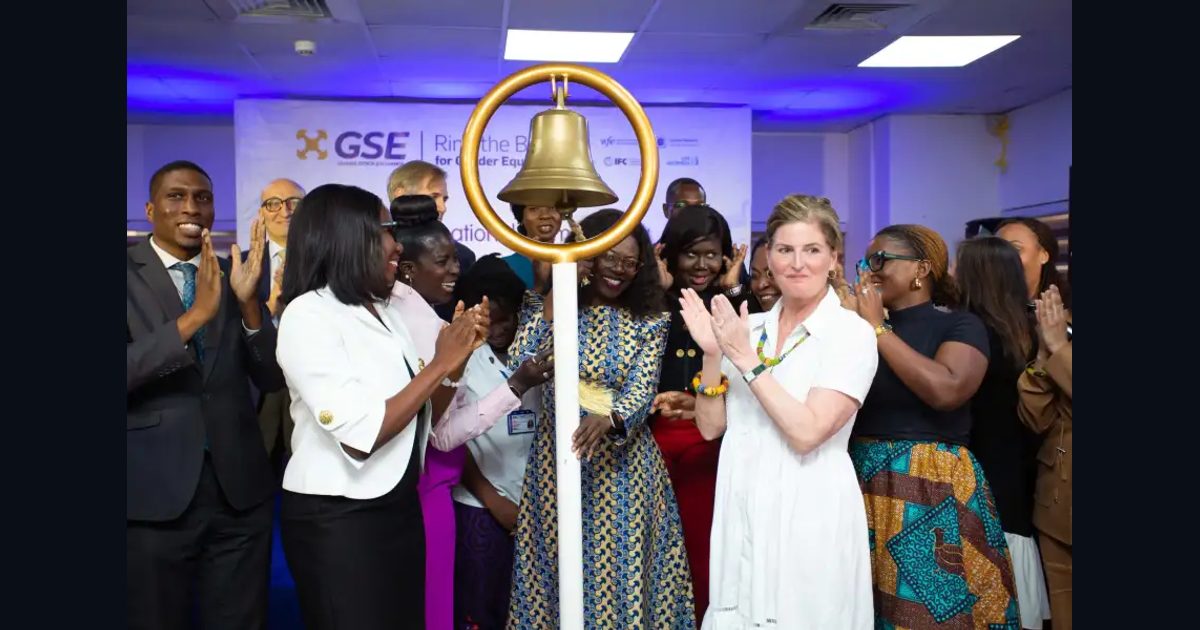
Speaking at the listing ceremony of Kasapreko PLC on the main market of the Ghana Stock Exchange, Managing Director of the GSE, Abena Amoah, said the Exchange was actively advancing plans to list state-owned enterprises, with the programme receiving strong backing from President John Dramani Mahama.
“We are also actively advancing the listing of State-Owned Enterprises — a programme strongly supported by President John Dramani Mahama, who reaffirmed his support during a recent visit to the London Stock Exchange. This initiative will unlock value, strengthen governance, and deepen our market further,” she said.
The initiative forms part of the GSE’s wider strategy to expand the number of listed companies, attract more investors and create a stronger capital market capable of supporting national development.
State-owned enterprises in focus
Several state-owned enterprises are considered potential candidates for listing due to the strategic nature of their operations and the value they could bring to the market.
These include the Electricity Company of Ghana, BOSTenergies, GNPC Explorco, Ghana Airports Company Limited, Tema Oil Refinery, GoldBod Jewelry, Ghana Re, GNPA Limited, TDC Ghana Limited and Architectural Engineering Services Limited.
If successfully listed, these companies could offer investors exposure to key sectors of the economy such as energy, petroleum, infrastructure, real estate, insurance, transport and public utilities.
For the government, listing SOEs could help raise long-term capital without relying heavily on debt, while also forcing stronger corporate governance, better financial reporting and improved operational accountability.
For the capital market, it would increase the number of quality investment options available to both retail and institutional investors.
Market performance gives GSE stronger momentum
The renewed focus on SOE listings comes at a time when the Ghana Stock Exchange is recording strong market performance.
According to Ms Amoah, as of June 12, 2026, the GSE Composite Index had gained 64.67 percent, extending three consecutive years of positive growth.
Trading activity has also improved sharply. From January to May 2026, the equities market recorded more than 457,000 trades, compared with about 63,000 trades during the same period in 2025. This represents an increase of more than 625 percent.
The strong jump in trading activity points to a market that is becoming more liquid, more active and more attractive to investors.
Ms Amoah said the numbers reflected growing investor confidence, improving liquidity and broader participation across different segments of the market.
She also noted that the bond market was recovering strongly, creating additional opportunities for government and corporate financing.
Beyond equities and bonds, the GSE is also working to expand products such as commercial paper, green bonds, sustainable bonds and over-the-counter instruments. These products are expected to give investors more ways to diversify their portfolios while helping companies raise capital for growth.
Commercial bank listings also being pursued
In addition to state-owned enterprises, the GSE is also working with the Bank of Ghana and the Securities and Exchange Commission to develop a framework that could support more commercial bank listings.
Industry players have long argued that getting more banks onto the stock exchange would improve transparency, strengthen governance and give investors more opportunities to participate in Ghana’s financial sector.
A stronger presence of banks on the market would also improve market depth, especially because banks remain a major part of Ghana’s economy.
If the regulatory pathway becomes clearer, more financial institutions may consider public listings, especially as companies seek long-term capital and investors look for more diversified opportunities.
Kasapreko listing seen as a signal to local businesses
The listing of Kasapreko PLC was described as an important example of how Ghanaian-owned businesses can use the capital market to raise funds, strengthen governance and support expansion.
Chief Executive Officer of the Association of Ghana Industries, Seth Twum-Akwaboah, commended Kasapreko’s listing and said it should encourage more indigenous businesses to consider the stock market as a serious financing option.
He said manufacturing plays a major role in Ghana’s economic development because it supports jobs, local suppliers, tax revenue and household incomes.
According to him, manufacturing businesses need long-term capital to expand, modernise and compete, making the stock exchange an important platform for growth.
“Manufacturing requires long-term funding, which is why getting on the stock exchange is so key,” he said.
He added that the capital market should not be seen as distant or reserved only for a few large companies, but as a pathway available to Ghanaian businesses that are ready to grow and meet investor expectations.
Mr Twum-Akwaboah also called for more collaboration among stakeholders to encourage small and medium-sized enterprises to list on the market.
What this means for investors
For investors on the Ghana Stock Exchange, the renewed push to list state-owned enterprises could be one of the most important developments to watch.
If strong SOEs are brought to the market, investors may gain access to companies operating in sectors that are currently difficult to invest in directly, including energy, petroleum, aviation, utilities, infrastructure and real estate.
This could improve diversification on the GSE, which is currently dominated by a limited number of sectors and companies.
More listings could also increase market liquidity. When there are more quality companies on the exchange, investors have more options to buy and sell, which can attract both local and foreign capital.
SOE listings could also improve dividend opportunities, especially if profitable state enterprises are listed and required to operate under stronger disclosure and governance rules.
However, investors will still need to be selective. Not every state-owned company will automatically become a good investment. The key issues to watch will be profitability, debt levels, regulatory risks, political interference, management quality and the company’s ability to generate consistent cash flow.
For long-term investors, the development is positive because it signals a broader effort to deepen Ghana’s capital market and create more investment opportunities.
If the GSE successfully attracts SOEs, more banks and more private companies like Kasapreko, the market could become more active, more transparent and more attractive over time.
The bigger message is clear: Ghana’s stock market is entering a new phase. After years of limited new listings, the return of IPO activity, rising trading volumes and renewed interest from major institutions could create fresh opportunities for investors who are patient, informed and disciplined.