Ghana’s Financial Sector Assets Hit GH¢647bn Amid Strong Economic Recovery
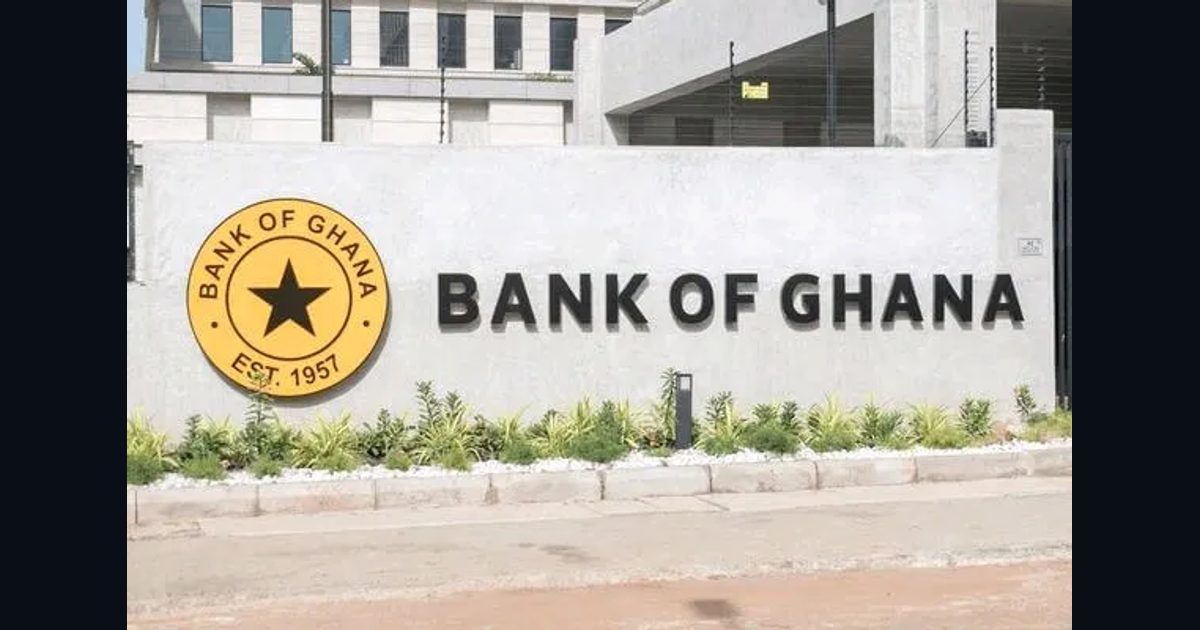
Ghana’s financial sector recorded a strong recovery in 2025, with total assets rising to GH¢647.25 billion, equivalent to about 45.1% of the country’s Gross Domestic Product (GDP), according to the latest Financial Stability Review released by the Bank of Ghana.
The growth reflects improved economic conditions and renewed confidence across the financial industry following years of economic challenges and debt restructuring pressures.
Speaking at the launch of the report in Accra, Matilda Asante-Asiedu said the review’s theme, “From Stress to Stability: Staying on Course,” captures the progress made by the sector in overcoming recent economic shocks.
She explained that Ghana’s financial system had managed to navigate difficult macroeconomic conditions and debt restructuring risks to reach a more stable position.
According to the report, Ghana’s economy expanded by 6.0% in 2025, higher than the 5.8% growth recorded the previous year. The growth was largely driven by strong performances in the services and agriculture sectors.
Inflation also declined significantly from 23.8% in December 2024 to 5.4% by December 2025. The Bank of Ghana attributed the sharp drop to tight monetary policy measures and the relative stability of the cedi.
The report highlighted improvements across the country’s major financial sectors.
The banking industry recorded stronger profitability, improved liquidity and better financial stability indicators throughout the year. However, the Bank of Ghana noted that Non-Performing Loans (NPLs) remain high and said new measures are being introduced to strengthen credit risk management.
Mrs Asante-Asiedu said the overall financial sector had become more resilient, supported by strong profitability and solvency levels across the banking, pensions, insurance and capital market sectors.
The Ghana Stock Exchange also emerged as Africa’s second-best performing stock market in 2025, driven by gains in financial stocks and improving investor confidence.
The pensions sector also recorded strong growth, supported by the expansion of private pension schemes and stricter enforcement against employers who fail to meet pension obligations. The report noted that pension funds increasingly diversified their investments into equities as macroeconomic conditions improved.
Meanwhile, the insurance industry maintained steady revenue growth, backed by strong solvency levels and new policies such as compulsory local insurance coverage for commercial cargo.
The Financial Stability Review also outlined new regulatory measures aimed at strengthening supervision within the financial system.
One of the major initiatives is the introduction of a framework for conglomerate supervision to improve oversight of financial groups operating across multiple sectors. According to Mrs Asante-Asiedu, the move is intended to reduce regulatory loopholes and improve coordination among regulators.
The Bank of Ghana is also stepping up its monitoring of financial technology and digital assets following the passage of the Virtual Assets Services Providers Act 2025.
Under the new framework, the Financial Stability Council has tasked its technical committee with developing risk monitoring systems for the virtual assets sector to ensure innovation does not threaten financial stability.
Globally, the report said economic conditions remained relatively supportive in 2025, with global GDP growth holding at 3.3% while global inflation eased to 4.1%.
Within Sub-Saharan Africa, economic growth averaged 4.1%, although several countries continued to face inflationary pressures and tight financing conditions.
Despite the positive outlook, the Bank of Ghana warned that risks remain. The report identified sovereign debt pressures, climate-related financial risks, cybersecurity threats, Artificial Intelligence (AI) developments and cryptocurrencies as potential concerns that could affect future financial stability.
Mrs Asante-Asiedu said financial institutions are already reviewing their operational models to adapt to changing conditions and reduce the risk of disruptions.
She reaffirmed the Bank of Ghana’s commitment to working closely with regulators under the Financial Stability Council to strengthen policy coordination, support financial sector development and maintain stability in the years ahead.
The report concluded that sustaining macroeconomic discipline and strengthening risk-based supervision will be critical to maintaining the sector’s recovery momentum.