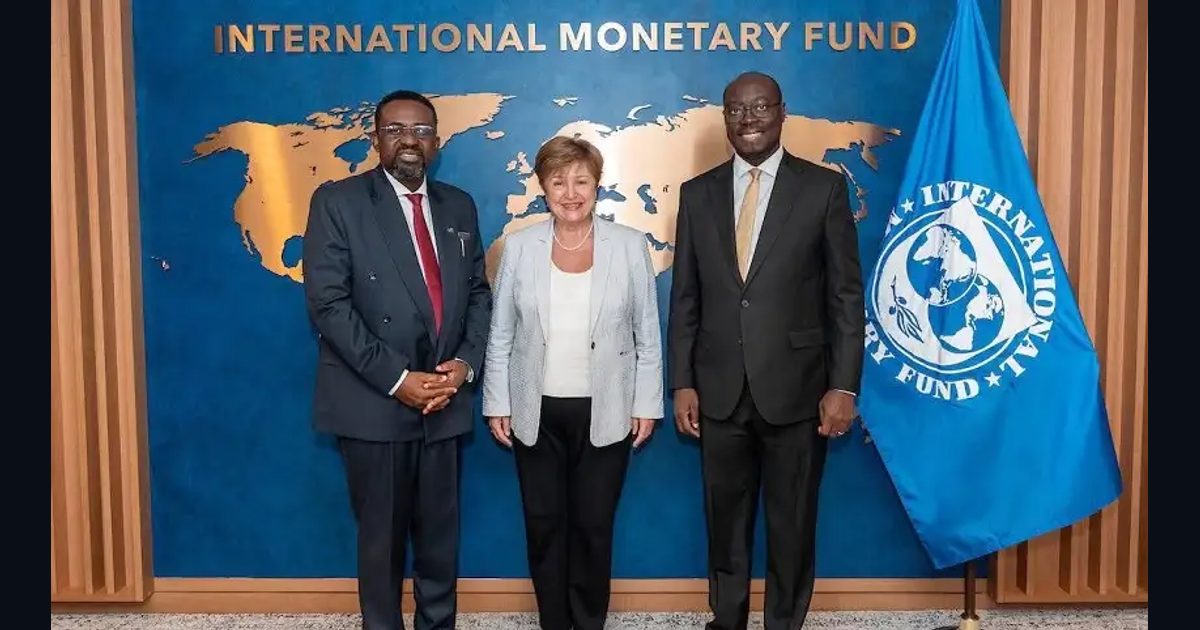
Ghana Successfully Concludes IMF Bailout Programme
Ghana has officially announced the successful completion of its Extended Credit Facility (ECF) programme with the International Monetary Fund (IMF), marking what government describes as a major step toward restoring economic stability and rebuilding investor confidence.
In a statement issued by Minister for Government Communications, Felix Kwakye Fosu, the government said the country had achieved macroeconomic stability and debt sustainability earlier than expected under the IMF-supported programme.
According to the statement, the administration of President John Mahama took decisive measures in 2025 to revive the programme after it reportedly went off track at the end of 2024.
The government said it implemented strong fiscal consolidation measures, reduced public spending, and introduced structural reforms aimed at stabilising the economy.
These measures, the statement noted, have begun producing visible results across key sectors of the economy. Inflation has declined significantly, the Ghana cedi has strengthened, and public debt as a percentage of Gross Domestic Product (GDP) has reduced sharply. Economic growth has also rebounded strongly.
Government further highlighted improvements in Ghana’s sovereign credit ratings, which it said moved from restricted default status to a “B” rating with a positive outlook. According to the statement, this reflects stronger fiscal performance, improved relations with creditors, healthier foreign reserves, and renewed confidence from investors.
Another major achievement outlined by the government is the growth in Ghana’s gross international reserves. The reserves reportedly reached approximately US$14.5 billion by February 2026, representing nearly six months of import cover.
The statement explained that the strong reserve position would help Ghana withstand future external economic shocks and strengthen confidence in the country’s financial system.
Government described the development as the “definitive end” of Ghana’s financial bailout relationship with the IMF and expressed appreciation to Ghanaians for their sacrifices and resilience throughout the economic recovery process.
Moving forward, Ghana is expected to transition to the IMF’s Policy Coordination Instrument (PCI), a non-financing programme designed to support economic reforms and strengthen policy credibility without direct financial assistance.
The PCI is also expected to help Ghana attract funding from private investors and development partners while maintaining fiscal discipline and economic reforms.
The statement reaffirmed President Mahama’s commitment to prudent economic management, good governance, fiscal discipline, and creating a more attractive environment for both local and foreign investment.
The announcement follows a visit to Accra by an IMF staff team led by Ruben Atoyan from April 29 to May 15, 2026, for discussions on Ghana’s 2026 Article IV consultation, the sixth and final review of the ECF programme, and the government’s request for the Policy Coordination Instrument.