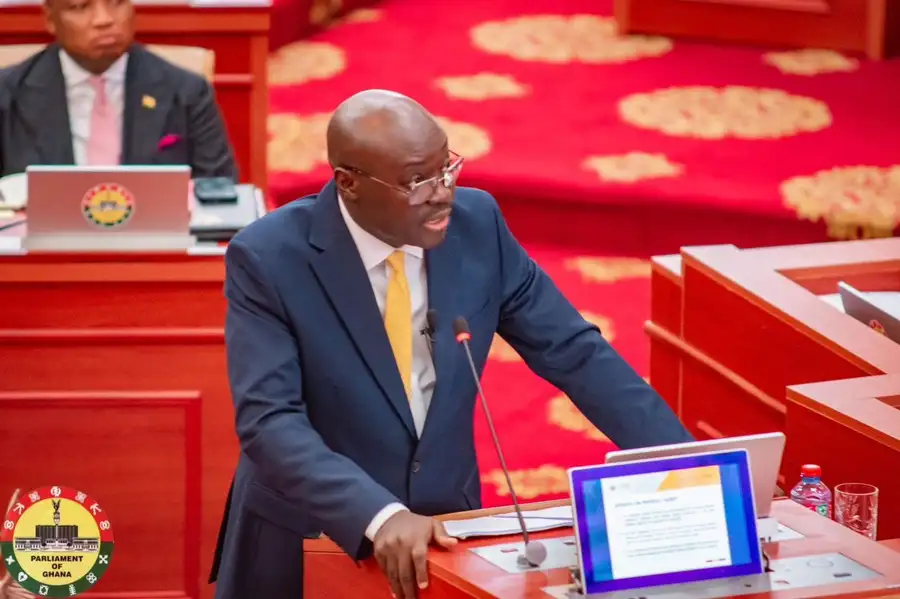
Finance Minister to Present New Economic Policy in 2026 Mid Year Budget Review
Finance Minister Dr Cassiel Ato Forson is expected to introduce the government’s new economic policy when he presents the 2026 Mid Year Budget Review to Parliament on Thursday, July 23.
The policy is expected to explain how the government plans to move Ghana’s economy beyond the recovery stage and focus more on long term growth.
Over the past year, the government has concentrated on reducing economic pressure, improving public finances and restoring confidence in the economy. The new policy is expected to build on these efforts by focusing on job creation, higher productivity, stronger businesses and more opportunities for Ghanaians.
Government sources say the plan will also aim to make the economy more resilient and ensure that economic growth benefits a wider section of the population.
Update on Ghana’s Economic Performance
During the presentation, Dr Forson is expected to provide a detailed update on how Ghana’s economy has performed during the first half of 2026.
He is likely to explain the progress made in controlling government spending, improving revenue collection and maintaining economic stability.
The Finance Minister is also expected to brief Parliament on Ghana’s relationship with the International Monetary Fund.
This may include an update on the country’s Extended Credit Facility programme and the expected transition to a Policy Coordination Instrument.
The new arrangement is expected to help Ghana maintain key economic reforms and fiscal discipline even after the current IMF supported programme ends.
Debt Restructuring and Debt Sustainability
Another major part of the Mid Year Budget Review is expected to focus on Ghana’s external debt restructuring programme.
The Finance Minister is expected to provide information on the progress made in negotiations with creditors and explain how the restructuring is affecting government finances and the wider economy.
He may also provide details on Ghana’s improved debt sustainability position following recent assessments by the International Monetary Fund.
Debt sustainability simply means a country is able to manage and repay its debts without placing too much pressure on the economy or cutting essential public services.
An improvement in Ghana’s debt position could help restore investor confidence and make it easier for the country to access financing in the future.
Revenue, Government Spending and Job Creation
Dr Forson is also expected to present the government’s revenue performance for the first six months of 2026.
This will show whether the government collected enough money from taxes, fees and other sources compared with the targets set in the 2026 Budget.
The review is also expected to explain how the government plans to manage spending for the rest of the year while continuing to support important areas such as education, healthcare, infrastructure and job creation.
The Finance Minister may announce new measures aimed at supporting businesses, expanding economic activity and creating more employment opportunities.
He is also expected to provide an update on debt servicing, government expenditure and the overall financial outlook for the second half of 2026.
Depending on the performance of the economy, the government may make adjustments to some of the revenue and spending targets announced in the original 2026 Budget.
Why the Mid Year Budget Review Matters
The Mid Year Budget Review gives the government an opportunity to explain how the national budget is being implemented and whether the economy is performing as expected.
It also allows Parliament to examine the government’s revenue, spending, borrowing and economic plans for the remainder of the year.
The review is required under Section 28 of the Public Financial Management Act, 2016, Act 921.
The law requires the Finance Minister to update Parliament on the implementation of the national budget and present the government’s fiscal outlook for the second half of the year.
The presentation is important to businesses, investors, development partners and the general public because it provides a clearer picture of Ghana’s economic direction.
For investors, the review could provide important information on inflation, government borrowing, interest rates, debt repayments, business growth and policies that may affect the Ghana Stock Exchange.