EU Investments in Ghana Hit US$16.24 Billion Over 30 Years – GIPC
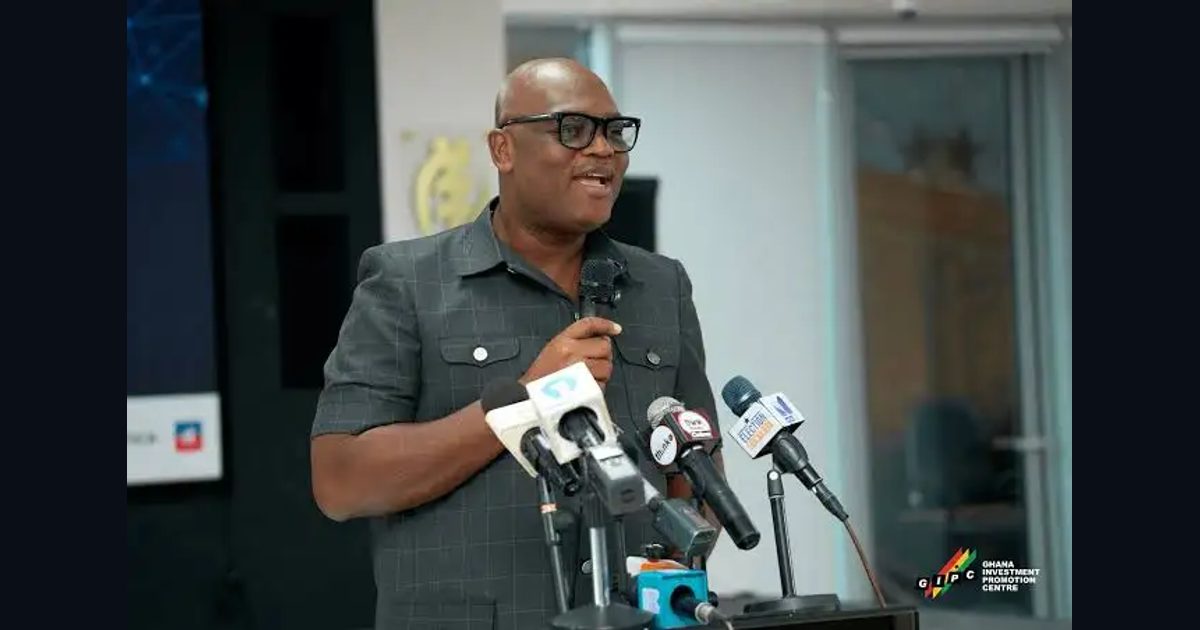
Ghana has attracted about US$16.24 billion in investment from the European Union (EU) over the past three decades, according to the Chief Executive Officer of the Ghana Investment Promotion Centre (GIPC), Simon Madjie.
Speaking at the inaugural Ghana–EU Thematic Dialogue on Economic Stabilisation and the Business Environment in Accra, Mr Madjie disclosed that the investments were recorded between 1994 and May 2026 across 2,236 projects in key sectors of the economy.
He explained that the manufacturing sector attracted the highest amount of investment, receiving more than US$8.49 billion. According to him, this reflects Ghana’s growing focus on industrial production and value addition.
The services sector recorded the highest number of projects with 804, followed by manufacturing with 456 projects and general trading with 219 projects. The construction sector attracted more than US$2 billion in investments, while mining received about US$406 million.
Mr Madjie said the dialogue follows commitments made during the June 2025 EU–Ghana Partnership Dialogue, where both parties agreed to strengthen cooperation on economic stabilisation and reforms aimed at improving the business environment.
He noted that discussions at the meeting focused on how Ghana and the EU can maximise opportunities under the Economic Partnership Agreement (EPA) and also explore the proposed Sustainable Investment Facilitation Agreement (SIFA), which is expected to improve legal certainty for investors.
On Ghana’s economy, Mr Madjie stated that the country had successfully completed the US$3 billion International Monetary Fund (IMF) Extended Credit Facility programme and had moved to a Policy Coordination Instrument to help maintain fiscal discipline.
He also pointed to Ghana’s improved sovereign credit rating by Fitch Ratings, which upgraded the country to a “B” rating with a positive outlook in May 2026, describing it as a sign of growing investor confidence in the economy.
According to him, ongoing government reforms are helping to strengthen Ghana’s investment climate. These reforms include the Ghana Investment Promotion Authority Bill, 2026, the Value for Money Office Act, 2026, and amendments to the Companies Act, 2019 (Act 992).
Mr Madjie further revealed that the GIPC is expanding its role beyond investment promotion to focus more on investment retention and expansion. He said this would be achieved through better aftercare services, quicker approval processes, and the introduction of a structured investor grievance mechanism.
The EU Ambassador to Ghana, Rune Skinnebach, reaffirmed the EU’s commitment to Ghana, stating that the bloc remains Ghana’s largest investor with Foreign Direct Investment (FDI) stock reaching €4.9 billion in 2025.
He added that in 2025, the EU imported goods worth €3.7 billion from Ghana, mainly cocoa products, while exporting €3.3 billion to the country.
Also speaking at the event, the German Ambassador to Ghana, Frederick Landshoft, described Ghana as a “gateway to West Africa” and reiterated Europe’s commitment to supporting the country’s development agenda.
The Deputy Minister for Trade, Agribusiness and Industry, Sampson Ahi, said government remains focused on transforming the economy and expanding Ghana’s productive sectors to create more opportunities for businesses and investors.