DBG Targets Over $1 Billion Investment to Transform Ghana’s Oil Palm Sector
The Development Bank Ghana (DBG) says it is developing specialised financial products to meet the different financing needs of businesses and operators across Ghana’s oil palm value chain.
Chief Executive Officer of DBG, Professor Randolph Nsor-Ambala, said the bank wants to move away from a one-size-fits-all approach and instead provide financing solutions that reflect the specific needs and risks of the various players in the industry.
DBG is currently working with 21 participating financial institutions, including universal and rural banks, to help unlock funding for businesses operating within the oil palm sector.
According to Prof. Nsor-Ambala, the existing financial system is not adequately structured to assess and absorb the risks associated with many oil palm projects.
“It is apparent that the current financial intermediation ecosystem is not sufficiently equipped to carry the risk and appraise the projects within the oil palm value chain properly,” he said.
DBG Moves Away From One-Size-Fits-All Financing
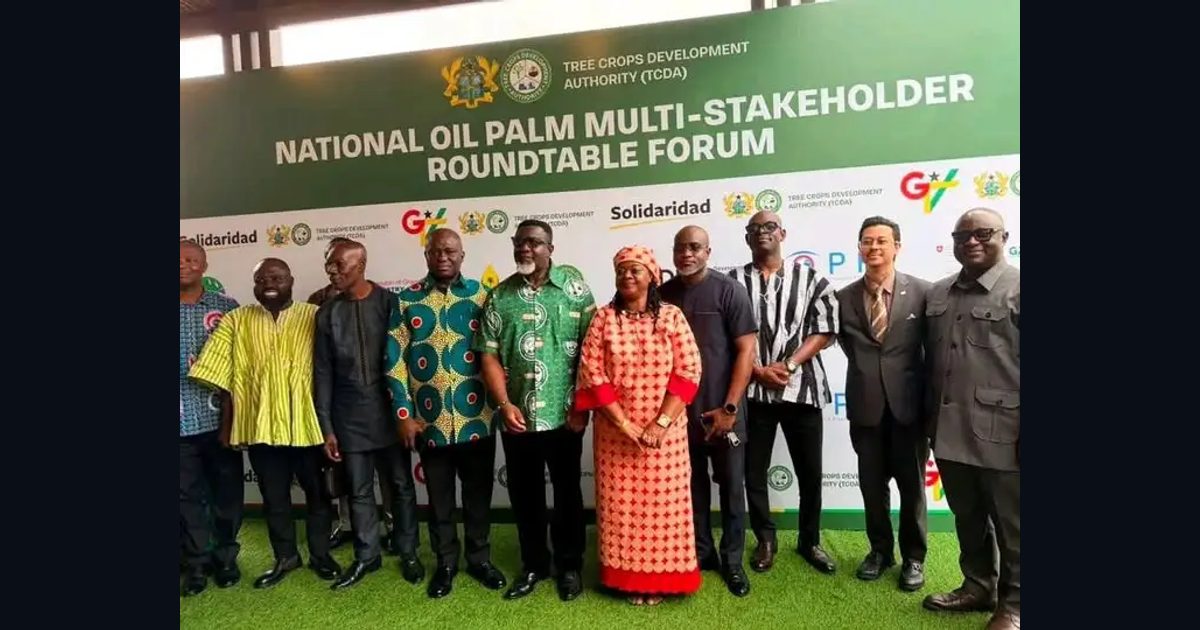
Speaking to the media on the sidelines of the national oil palm multi-stakeholder roundtable in Accra last Wednesday, Prof. Nsor-Ambala said DBG had recognised that different participants in the value chain require different forms of financial support.
“As a bank, we have disabused our minds of the fact that there is a one-size financial instrument that will address the needs of all stakeholders,” he said.
He explained that DBG is preparing the 21 participating banks to better understand the oil palm industry before financing is disbursed.
The aim is to ensure that the financial institutions have the capacity and industry knowledge needed to properly assess projects and manage the risks associated with lending to businesses in the sector.
The roundtable, organised by the Tree Crop Development Authority (TCDA), was held under the theme, “From policy to practice: The role of TCDA in resetting Ghana’s oil palm industry.”
It brought together stakeholders across the oil palm value chain to discuss ways to expand the industry, increase its economic contribution and create more employment opportunities.
Financing Must Reflect Different Needs
Prof. Nsor-Ambala said DBG had observed that the challenges facing businesses and individuals within the oil palm industry vary significantly.
For this reason, the bank believes financing must be designed around the broader value chain rather than treating every participant in the same way.
He said the close relationship between farmers, processors, distributors and other businesses within the industry makes it necessary to develop products that take the entire ecosystem into account.
DBG’s role, he added, is to help attract and support more private sector investment into the industry as part of Ghana’s broader economic transformation agenda.
The bank is therefore working on different financial instruments to meet the needs of businesses operating at various stages of the oil palm value chain.
Prof. Nsor-Ambala noted that the long-term nature of oil palm production remains one of the major financing challenges.
“This is important to appreciate because for a product whose gestation period is five to seven years, there are currently not adequate instruments within the financial ecosystem that respond directly to the needs of the oil palm sector,” he said.
$500 Million Facility Not Enough to Meet Sector’s Needs
Prof. Nsor-Ambala also addressed the $500 million facility announced in the 2026 budget to support Ghana’s oil palm industry.
He said the Finance Minister indicated during the mid-year budget review that preparatory work was still underway to finalise the financing agreement with the World Bank.
Once completed, the agreement is expected to be presented to Parliament.
According to the DBG CEO, the bank’s main role will begin when the financing is ready for disbursement.
He said DBG intends to have several financing solutions available by then, following discussions with industry stakeholders.
“The focus, for us, is that we need to have multiple sets of solutions available because the stakeholder meeting we convened on April 1, this year, made it absolutely clear that we could not have a one-size-fits-all solution for all the active actors within the value chain,” he said.
DBG estimates that more than $1 billion in investment will be required to achieve the expected transformation of Ghana’s oil palm industry.
Prof. Nsor-Ambala said the planned $500 million facility, although significant, would therefore not be enough on its own.
“Quite clearly, the $500 million, while significant, is insufficient, and so it necessarily needs to be deployed in strategic manners to encourage private sector participants also to be able to contribute to the agenda of private sector-led growth,” he said.
DBG is therefore looking to use the available funding strategically to attract additional private investment and expand access to financing across Ghana’s oil palm value chain.